
Erosion is expensive in a quiet way. It starts with a thin wash of red clay after a storm. Then a bare spot grows, water cuts a channel, and the slope begins to move. In Atlanta, GA, that pattern shows up fast because the Piedmont topography is full of rolling grades, the soil holds water, and rainfall can stay heavy for weeks at a time. The result is familiar across Fulton County: soil erosion near the foundation, pooling water behind a wall, and early slope instability. Some fixes cost very little. Others look cheap at first and then create bigger problems, especially when a retaining wall is involved. A retaining wall in Atlanta often needs more than materials and labor. It needs an engineer for retaining wall safety, drainage, and permitting. The methods below stay budget-focused while keeping safety in the foreground. They also fit common Atlanta neighborhoods like Buckhead, Midtown, Virginia-Highland, and Morningside, including high-elevation lots in 30327 and 30305 where runoff and pressure problems are common.
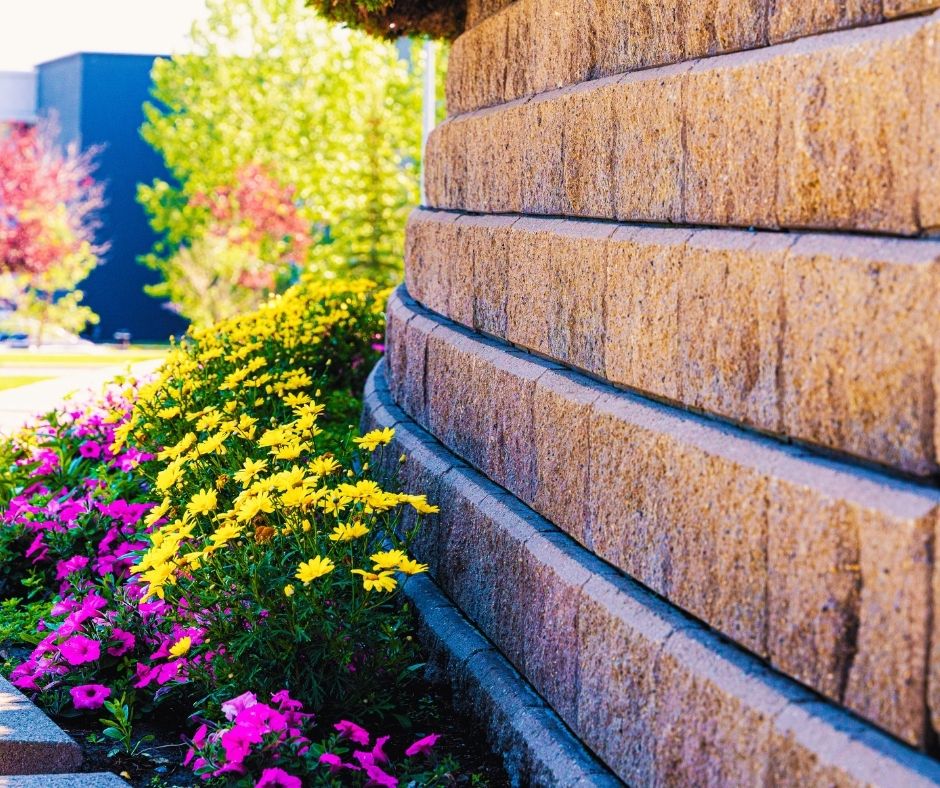
Atlanta’s red clay can hold moisture and build hydrostatic pressure behind a wall. That pressure adds to lateral earth pressure and can push a wall outward. Add poor drainage or the wrong backfill, and a wall can start to lean. Cracks often follow. In the worst cases, wall failure happens after prolonged rain, when surcharge loading from saturated soil increases the force against the structure. These issues show up around hills near Chastain Park, along parts of the Atlanta BeltLine, and at older properties where grading was never designed for today’s stormwater patterns. When a wall is involved, a retaining wall structural engineer is often the budget-friendly decision because a correct design and drainage plan can prevent a rebuild.
When erosion problems exceed what a property owner can handle alone, professional help does not have to mean surprise costs. Heide Contracting is known for clear pricing and practical solutions that address soil erosion, poor drainage, and grading and drainage issues without unnecessary add-ons. For projects where retaining wall design or foundation engineering is part of the fix, the team supports site-specific engineering that accounts for lateral earth pressure, surcharge loading, and hydrostatic pressure, which are common drivers of structural failure in Atlanta’s clay-heavy soils. Many sites do not need a full rebuild. They need a correct diagnosis, solid grading, and better drainage. On retaining wall repair Atlanta jobs, value often comes from a focused scope. A structural assessment helps identify what is actually failing. A structural engineer or civil engineer reviews slope geometry, drainage paths, and load conditions. Foundation engineering may be needed when erosion is undermining footings or when water is collecting near the home. The City of Atlanta has permitting rules and residential retaining wall height regulations that can affect scope and timing. For properties near steep grades in Buckhead, Chastain Park, Virginia-Highland, and Morningside, early planning reduces delays and rework. Heide Contracting can provide professional engineering drawings and support permit acquisition in Atlanta and Fulton County when required. The team is also familiar with Keystone Retaining Wall Systems and Belgard components, and aligns work with organizations and standards commonly referenced in the industry, including ASCE, NCMA, and ICC.
One of the lowest-cost ways to protect bare soil is to cover it. Mulch, wood chips, straw, and compost absorb the impact of rain and slow runoff. In high rainfall areas, this basic cover can reduce soil loss quickly, especially on Atlanta slopes where stormwater concentrates and washes red clay downhill. Free sources are common. Many municipalities provide mulch or compost from yard waste. Tree services often drop wood chips at no charge. Even when purchased, mulch is usually cheaper than repairing washouts after every storm. For best results, spread a three to four inch layer over exposed soil. On steeper slopes, light staking or erosion netting can hold it in place until vegetation establishes.
Plants stabilize soil through roots and reduce runoff through coverage. Deep-rooted grasses, ground covers, and shrubs can create a living system that holds soil during heavy rain. In the Piedmont, vegetation is one of the best long-term erosion controls because it continues working through wet cycles and heat. Cost stays low when plant selection matches the site. Planting in fall or early spring can reduce watering needs because natural rainfall helps establish roots. Smaller plants and seed mixes cost less than mature plants and can perform well when the slope is protected during the first season. If a property already has a retaining wall, plants still matter. Fast runoff across the top of a wall can overwhelm drainage behind it. Vegetation above and below the wall helps reduce the volume and speed of water, which lowers the chance of hydrostatic pressure buildup. Water pooling behind a wall is a common sign of failed drainage and weep holes, and it should be addressed quickly.
Temporary barriers are useful when soil is disturbed or when a slope needs short-term protection. A basic silt fence slows water and catches sediment. Straw bales can work the same way at the base of a disturbed area. For small channels, simple check dams made from rocks, logs, or sandbags can slow flow and reduce cutting. DIY barriers need careful placement near structures. Redirecting runoff toward a retaining wall can raise hydrostatic pressure and increase the risk of wall failure. If the site includes a wall, a structural engineer can review the site planning approach to avoid unintended loading. This is especially important on steep lots where water speeds up quickly.
Many erosion problems are water problems. Fixing water movement is often cheaper than repeatedly fixing damage. Start by observing the property during and after rain. Look for where water collects, where it flows fastest, and where it cuts into soil. Small grading changes such as a shallow swale or a berm can redirect water away from vulnerable slopes. Downspouts are a common cause of residential erosion. Extending downspouts away from the foundation and directing discharge to a safe area can cost very little and prevent serious soil loss. For larger areas, equipment rental can be cost-effective. Compaction equipment helps stabilize soils after grading, and laser levels help keep slopes consistent so water drains as planned. Drainage details become critical when the site involves a gravity wall, cantilevered wall, segmental retaining wall (SRW), gabion baskets, timber sleepers, or reinforced concrete. Backfill selection, weep holes, and drainage stone placement affect how pressure builds behind the wall. Geotechnical engineering input can be helpful when soil conditions are uncertain or when slope instability is already visible. French drains can be a cost-effective option for persistent wet areas. Materials are generally affordable, and a well-placed drain can intercept water before it builds pressure or erodes slopes. The outlet must discharge to a safe location that does not send water back toward the wall or toward a neighbor’s property.
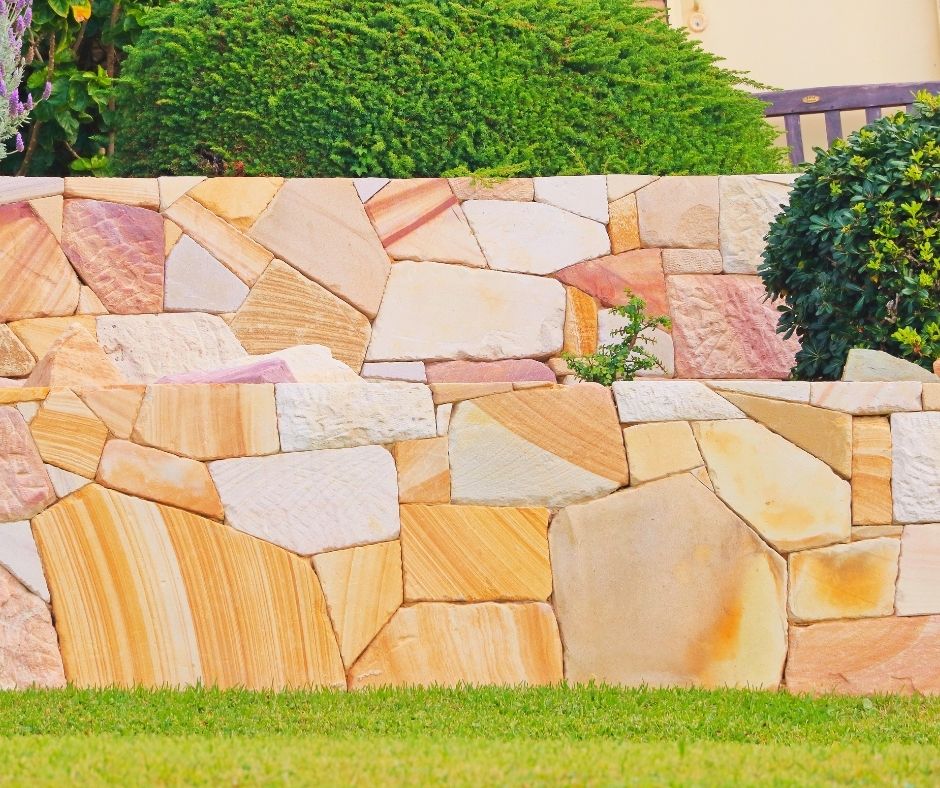
Not every erosion problem needs a retaining wall. But when a wall is leaning, cracking, bulging, or showing movement after rain, the fix often requires retaining wall design and professional review. A retaining wall structural engineer can calculate lateral earth pressure, surcharge loading, and drainage requirements to reduce hydrostatic pressure behind the wall. Engineering plans often specify deep footings, site-specific backfill, and strategic weep holes. Reinforcement details may include Geogrid and deadman anchors, depending on the wall type. A segmental retaining wall (SRW) may need corrected base preparation and reinforcement lengths. A cantilevered wall or reinforced concrete wall may require revised footing and drainage details. The right foundation engineering plan matters because the cost of a wrong repair is usually higher than the cost of doing it correctly once. Heide Contracting provides structural assessments and professional engineering drawings for new walls and retaining wall repair Atlanta projects. The team also supports permit acquisition for the City of Atlanta and Fulton County when required. Service coverage often extends beyond Atlanta into nearby areas such as Decatur, Brookhaven, Vinings, Smyrna, Marietta, Roswell, Alpharetta, and Dunwoody.
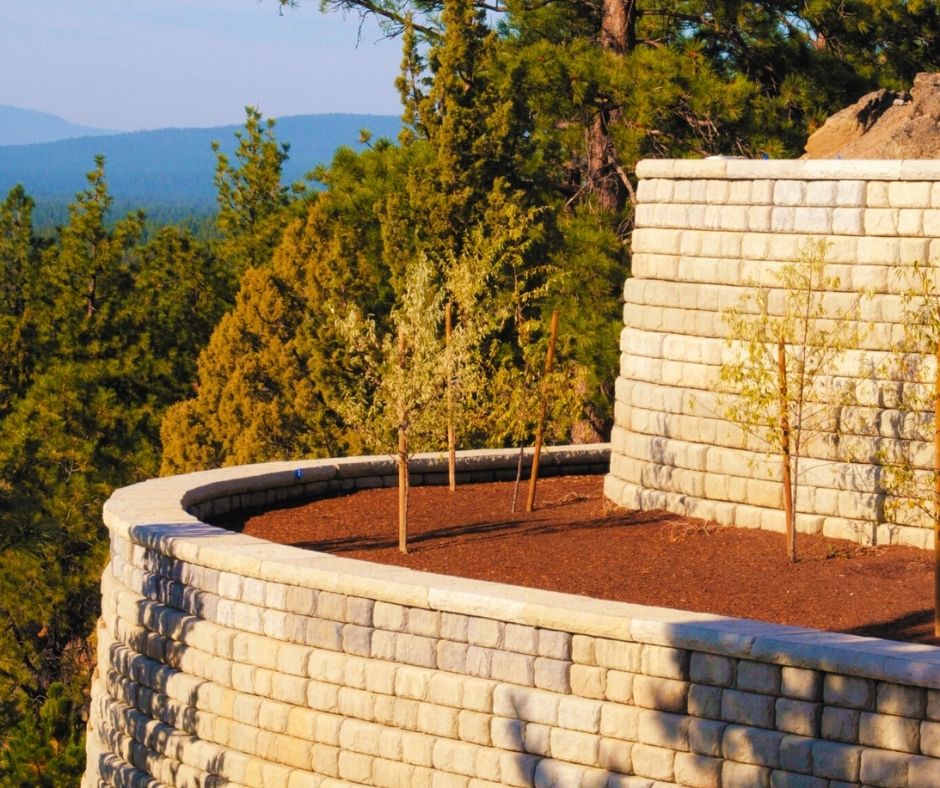
Budget-friendly erosion control starts by stopping the water from doing the same damage again. Mulch and planting help fast. Temporary barriers protect disturbed soil. Grading and drainage prevent repeat problems. When a retaining wall is part of the site, early engineering helps keep costs controlled because it reduces the risk of wall failure and rework. For properties in Atlanta, GA that show warning signs such as wall tilting, water pooling behind a wall, soil erosion at the base, or visible wall cracking, a structural assessment can clarify what is safe to repair and what needs redesign. Heide Contracting can schedule an on-site review and provide PE-stamped drawings that fit the property, the soil conditions, and local permitting expectations.
Redirect to:
|
This page is a redirect. The following categories are used to track and monitor this redirect:
|

Retaining walls are relatively rigid walls used for supporting soil laterally so that it can be retained at different levels on the two sides. Retaining walls are structures designed to restrain soil to a slope that it would not naturally keep to (typically a steep, near-vertical or vertical slope). They are used to bound soils between two different elevations often in areas of inconveniently steep terrain in areas where the landscape needs to be shaped severely and engineered for more specific purposes like hillside farming or roadway overpasses. A retaining wall that retains soil on the backside and water on the frontside is called a seawall or a bulkhead.
A retaining wall is designed to hold in place a mass of earth or the like, such as the edge of a terrace or excavation. The structure is constructed to resist the lateral pressure of soil when there is a desired change in ground elevation that exceeds the angle of repose of the soil.[1]
A basement wall is thus one kind of retaining wall; however, the term usually refers to a cantilever retaining wall, which is a freestanding structure without lateral support at its top.[2] These are cantilevered from a footing and rise above the grade on one side to retain a higher level grade on the opposite side. The walls must resist the lateral pressures generated by loose soils or, in some cases, water pressures.[3]

Every retaining wall supports a "wedge" of soil. The wedge is defined as the soil which extends beyond the failure plane of the soil type present at the wall site, and can be calculated once the soil friction angle is known. As the setback of the wall increases, the size of the sliding wedge is reduced. This reduction lowers the pressure on the retaining wall.[4]
The most important consideration in proper design and installation of retaining walls is to recognize and counteract the tendency of the retained material to move downslope due to gravity. This creates lateral earth pressure behind the wall which depends on the angle of internal friction (phi) and the cohesive strength (c) of the retained material, as well as the direction and magnitude of movement the retaining structure undergoes.
Lateral earth pressures are zero at the top of the wall and – in homogeneous ground – increase proportionally to a maximum value at the lowest depth. Earth pressures will push the wall forward or overturn it if not properly addressed. Also, any groundwater behind the wall that is not dissipated by a drainage system causes hydrostatic pressure on the wall. The total pressure or thrust may be assumed to act at one-third from the lowest depth for lengthwise stretches of uniform height.[5]
It is important to have proper drainage behind the wall in order to limit the pressure to the wall's design value. Drainage materials will reduce or eliminate the hydrostatic pressure and improve the stability of the material behind the wall. Drystone retaining walls are normally self-draining.
As an example, the International Building Code requires retaining walls to be designed to ensure stability against overturning, sliding, excessive foundation pressure and water uplift; and that they be designed for a safety factor of 1.5 against lateral sliding and overturning.[6]


Gravity walls depend on their mass (stone, concrete or other heavy material) to resist pressure from behind and may have a 'batter' setback to improve stability by leaning back toward the retained soil. For short landscaping walls, they are often made from mortarless stone or segmental concrete units (masonry units).[7] Dry-stacked gravity walls are somewhat flexible and do not require a rigid footing. They can be built to a low height without additional materials being inserted, and have concrete added for strength and stability. [8]
Earlier in the 20th century, taller retaining walls were often gravity walls made from large masses of concrete or stone. Today, taller retaining walls are increasingly built as composite gravity walls such as: geosynthetics such as geocell cellular confinement earth retention or with precast facing; gabions (stacked steel wire baskets filled with rocks); crib walls (cells built up log cabin style from precast concrete or timber and filled with granular material).[9]
Cantilevered retaining walls are made from an internal stem of steel-reinforced, cast-in-place concrete or mortared masonry (often in the shape of an inverted T). These walls cantilever loads (like a beam) to a large, structural footing, converting horizontal pressures from behind the wall to vertical pressures on the ground below. Sometimes cantilevered walls are buttressed on the front, or include a counterfort on the back, to improve their strength resisting high loads. Buttresses are short wing walls at right angles to the main trend of the wall. These walls require rigid concrete footings below seasonal frost depth. This type of wall uses much less material than a traditional gravity wall.
Diaphragm walls are a type of retaining walls that are very stiff and generally watertight. Diaphragm walls are expensive walls, but they save time and space, and hence are used in urban constructions.[10]

Sheet pile retaining walls are usually used in soft soil and tight spaces. Sheet pile walls are driven into the ground and are composed of a variety of material including steel, vinyl, aluminum, fiberglass or wood planks. For a quick estimate the material is usually driven 1/3 above ground, 2/3 below ground, but this may be altered depending on the environment. Taller sheet pile walls will need a tie-back anchor, or "dead-man" placed in the soil a distance behind the face of the wall, that is tied to the wall, usually by a cable or a rod. Anchors are then placed behind the potential failure plane in the soil.

Bored pile retaining walls are built by assembling a sequence of bored piles, followed by excavating away the excess soil. Depending on the project, the bored pile retaining wall may include a series of earth anchors, reinforcing beams, soil improvement operations and shotcrete reinforcement layer. This construction technique tends to be employed in scenarios where sheet piling is a valid construction solution, but where the vibration or noise levels generated by a pile driver are not acceptable.

An anchored retaining wall can be constructed in any of the aforementioned styles but also includes additional strength using cables or other stays anchored in the rock or soil behind it. Usually driven into the material with boring, anchors are then expanded at the end of the cable, either by mechanical means or often by injecting pressurized concrete, which expands to form a bulb in the soil. Technically complex, this method is very useful where high loads are expected, or where the wall itself has to be slender and would otherwise be too weak.
Soil nailing is a technique in which soil slopes, excavations or retaining walls are reinforced by the insertion of relatively slender elements – normally steel reinforcing bars. The bars are usually installed into a pre-drilled hole and then grouted into place or drilled and grouted simultaneously. They are usually installed untensioned at a slight downward inclination. A rigid or flexible facing (often sprayed concrete) or isolated soil nail heads may be used at the surface.
A number of systems exist that do not consist of just the wall, but reduce the earth pressure acting directly on the wall. These are usually used in combination with one of the other wall types, though some may only use it as facing, i.e., for visual purposes.

This type of soil strengthening, often also used without an outside wall, consists of wire mesh "boxes", which are filled with roughly cut stone or other material. The mesh cages reduce some internal movement and forces, and also reduce erosive forces. Gabion walls are free-draining retaining structures and as such are often built in locations where ground water is present. However, management and control of the ground water in and around all retaining walls is important.
Mechanically stabilized earth, also called MSE, is soil constructed with artificial reinforcing via layered horizontal mats (geosynthetics) fixed at their ends. These mats provide added internal shear resistance beyond that of simple gravity wall structures. Other options include steel straps, also layered. This type of soil strengthening usually needs outer facing walls (S.R.W.'s – Segmental Retaining Walls) to affix the layers to and vice versa.[11]
The wall face is often of precast concrete units[7] that can tolerate some differential movement. The reinforced soil's mass, along with the facing, then acts as an improved gravity wall. The reinforced mass must be built large enough to retain the pressures from the soil behind it. Gravity walls usually must be a minimum of 50 to 60 percent as deep or thick as the height of the wall, and may have to be larger if there is a slope or surcharge on the wall.
Cellular confinement systems (geocells) are also used for steep earth stabilization in gravity and reinforced retaining walls with geogrids. Geocell retaining walls are structurally stable under self- weight and externally imposed loads, while the flexibility of the structure offers very high seismic resistance.[12] The outer fascia cells of the wall can be planted with vegetation to create a green wall.

| Investigation and instrumentation |
|
||||||
|---|---|---|---|---|---|---|---|
| Soil |
|
||||||
| Structures (Interaction) |
|
||||||
| Mechanics |
|
||||||
| Numerical analysis software |
|||||||
| Related fields | |||||||
| International | |
|---|---|
| National | |
| Other | |


