
According to IRS data, approximately 25 million households file the Earned Income Tax Credit annually, while an estimated 31 million households are eligible but do not file to claim it. In Memphis and Shelby County, where median household incomes fall significantly below the national average and EITC-eligible households are concentrated in neighborhoods including Frayser, Whitehaven, and the Austin Peay corridor, the PATH Act hold affects a disproportionately large share of the local tax filing population compared to wealthier Tennessee cities.
A Government Accountability Office assessment found that fraudulent tax refund claims, the majority involving fabricated EITC and Child Tax Credit filings, were costing the federal government over $100 million per year before the PATH Act passed in December 2015. The delay gives the IRS time to match filer income data against employer-submitted W-2 and 1099 forms, which employers are required to file by January 31, before releasing refunds to legitimate claimants.
For tax year 2025, the maximum Earned Income Tax Credit for a household with three or more qualifying children is approximately $8,200, with the credit phasing down based on income above the threshold. For households with two qualifying children the maximum is approximately $7,300, and for one qualifying child approximately $4,400. For Memphis working families whose federal refund represents the largest single cash deposit of the year, a six to eight week PATH Act hold on a refund of that size creates measurable financial pressure that a same-day no-credit-check advance directly resolves.
Every January, millions of Americans file their federal tax returns expecting a refund within three weeks. For most of them, that timeline holds. But for hundreds of thousands of Memphis households, a federal law passed in 2015 interrupts that process every single tax season, holding the most substantial refunds until late February regardless of when the return was filed. The law is the Protecting Americans from Tax Hikes Act, commonly called the PATH Act. And the reason it lands harder in Memphis than in almost any other Tennessee city comes down to one specific tax credit that more Memphis families qualify for than anywhere else in the state.

The PATH Act was signed into federal law in December 2015. Among its provisions, it requires the IRS to hold any refund that includes the Earned Income Tax Credit or the Additional Child Tax Credit until at least mid-to-late February, regardless of when the taxpayer filed. The law was designed to give the IRS additional time to verify EITC and ACTC claims before releasing funds, because these credits had historically been targets for fraudulent filings. The delay is not optional and it is not a processing error. It is a legal requirement written into the tax code, and it applies to every EITC and ACTC filer in the country.
For a household in Nashville's wealthier suburbs where the average refund comes from standard withholding adjustments rather than EITC, the PATH Act is largely invisible. Those filers receive their refunds on the standard IRS timeline. But for a working family in Whitehaven or Frayser filing with three qualifying children and an adjusted gross income that places them squarely in the EITC eligibility range, the PATH Act means their refund, which can total $6,000 to $7,000 or more, will not be released by the IRS until the last week of February at the earliest, even if they filed their return on January 2nd.
The Earned Income Tax Credit is designed for low-to-moderate income workers. The credit phases in with earned income, reaches a maximum at a certain income threshold, and then phases out as income rises further. The maximum EITC for a family with three or more qualifying children can exceed $7,000 for a single tax year. To qualify at or near the maximum, a household needs multiple qualifying children, earned income from wages or self-employment, and an adjusted gross income that stays within the IRS thresholds.
Memphis is the largest city in Tennessee and the seat of Shelby County. Its median household income falls significantly below the national average and below the Tennessee state average. The neighborhoods along the Austin Peay Highway corridor in the 38128 zip code, throughout Frayser in 38127, across Whitehaven near Elvis Presley Boulevard, through Orange Mound, Berclair, and Raleigh, and in North Memphis around LeMoyne-Owen College and Southwest Tennessee Community College, contain some of the highest concentrations of EITC-eligible households in the entire state.
In 2024, the United Way of the Mid-South's free tax preparation program alone generated over $3.9 million in EITC claims for local households, with an average refund exceeding $1,600 across participating filers. That figure represents only the filers served through the free program. The total EITC volume flowing through all Memphis tax preparation services each season represents one of the largest concentrations of PATH Act-affected refunds of any city in Tennessee.
Most states impose a state income tax on wages, which means residents receive both a federal and a state refund each tax season. Tennessee does not tax wages or salaries at the state level. Memphis residents who work W-2 jobs or file self-employment income on Schedule C are filing only a federal Form 1040. Their entire refund, including the EITC and Child Tax Credit, comes from the federal return alone. There is no supplemental state refund to offset the wait. When the PATH Act delays the federal refund, Memphis households are waiting on the only refund they have.
For a household in zip code 38116 in Hickory Hill or 38109 in South Memphis that relies on a $5,500 EITC refund to cover a month of rent, utility arrears, or a car repair that has been deferred since December, the difference between receiving that money in late January and receiving it in late February is not a minor inconvenience. It is five to seven weeks of financial pressure with no fallback.
The PATH Act delays the release of EITC refunds, but it does not delay IRS acceptance of the electronically filed return. That distinction is the foundation of how a tax refund advance resolves the problem for Memphis filers. When TaxShield Service prepares and e-files a Memphis household's federal return, the IRS typically accepts it within 24 hours of submission. That acceptance, not the eventual refund release, is what triggers a refund advance approval. A Memphis filer with three qualifying children and a calculated EITC of $6,800 can receive an advance against that amount the same day the IRS confirms acceptance of the return, weeks before the PATH Act hold expires and the actual refund arrives.
A tax refund advance is not a payday loan. It is not a traditional credit product at all. The approval process does not involve a credit score review, a credit report pull, or any evaluation of the applicant's borrowing history. What it does involve is the expected refund amount calculated on the prepared return, confirmation that the IRS has accepted the e-filed return, and verification that the applicant has a valid bank account for direct deposit. A Memphis filer with a credit score of 580, collections on their report, or a Chapter 7 bankruptcy discharged two years ago qualifies for a refund advance under the same criteria as someone with excellent credit. The IRS does not care about a filer's credit history when calculating their EITC, and TaxShield's advance approval does not either.
The contrast with payday lenders is significant in Memphis, where storefronts advertising emergency cash concentrate along Austin Peay Highway, Lamar Avenue, and Elvis Presley Boulevard. A payday loan covering the same cash need as a refund advance carries an annual percentage rate that typically exceeds 300 to 400 percent when calculated on the two-week borrowing period. The fees on a $500 payday loan can run $75 to $100, due in full when the borrower's next paycheck arrives. For a family waiting on a $6,000 EITC refund, using a payday loan as a bridge is a significantly more expensive option than accessing an advance directly against the refund that the IRS is already processing.
Understanding the full timeline helps Memphis filers plan. After the IRS accepts an electronically filed return that includes EITC or ACTC, the PATH Act hold keeps the refund in IRS processing until the statutory release date, which has historically fallen in the last week of February. The IRS Where's My Refund tool will show the return as accepted and in process during that window. It will not show the refund as approved or scheduled for deposit until the hold expires. For filers who obtained an advance through TaxShield, that waiting period is a non-issue because the advance funds were already deposited weeks earlier.
Filers who did not get an advance and are watching IRS Where's My Refund during February are frequently confused by the extended hold, believing their return has a problem when it is functioning exactly as the PATH Act requires. In Raleigh, in Oakhaven, and in Parkway Village, the questions about why a mid-February refund has not appeared yet represent one of the most common tax season inquiries that TaxShield Service handles, and the answer is the same every year: the hold is mandatory, not a flag, and the refund will release once the statutory window closes.
TaxShield Service provides tax preparation and refund advances for households throughout Memphis and Shelby County, including the Austin Peay corridor in zip codes 38127 and 38128, Whitehaven and Hickory Hill in 38116 and 38115, Orange Mound, Frayser, Berclair, Raleigh, North Memphis, and surrounding communities including Bartlett, Millington, Cordova, and Germantown. Advances up to $7,000 are available with no credit check required, with direct deposit to any bank account including GreenDot and Chime accounts. TaxShield is open Monday through Saturday from 9 AM to 7 PM. Call (901) 582-8910 to check advance approval with no credit check for tax advance in Memphis, or pre-qualify online at taxshieldservice.com. Bringing a valid photo ID, Social Security cards for all dependents, and all W-2 and 1099 income documents allows tax preparation and advance processing to be completed in a single visit.
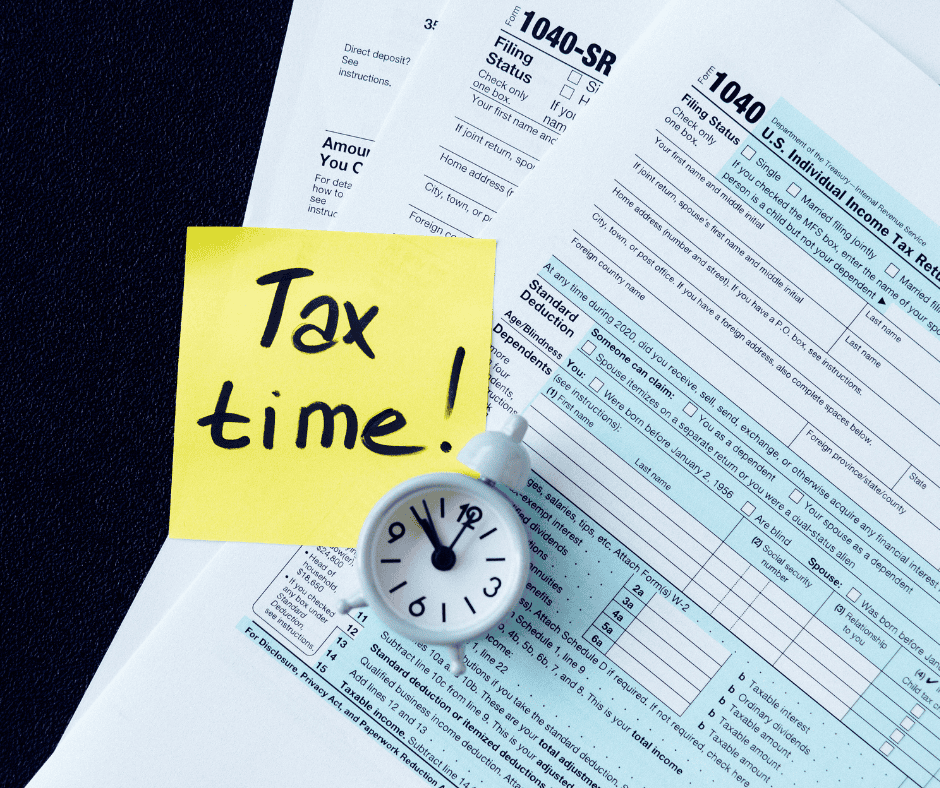
A no-credit-check advance approval focuses on the refund itself, not the applicant's credit history. But there are specific IRS-related conditions that do affect eligibility, and Memphis filers who are aware of them can address them before filing rather than after. The most common disqualifier is a Treasury Offset. If the IRS has flagged a filer's account for an outstanding federal debt, a defaulted student loan, past-due child support, or back taxes owed from a prior year, the government can apply the refund against that debt before releasing any remainder. An offset reduces the net refund amount, and if the remaining amount falls below the minimum advance threshold, the advance cannot be processed against it. A second common issue is a rejected return. If the IRS rejects the e-filed return due to a mismatched Social Security number, a duplicate dependent claim, or an incorrect prior-year AGI entry, there is no accepted return to trigger advance approval. TaxShield preparers verify identity documents, Social Security cards for all dependents, and prior-year filing information before submission specifically to prevent rejection on these grounds. For Memphis households in Hickory Hill, Oakhaven, or Berclair who have had an advance declined elsewhere, the reason is almost always one of these IRS-side conditions rather than credit history.

A significant share of working Memphis households earn income outside traditional W-2 employment. Delivery drivers contracting through app-based platforms, independent contractors, home care workers paid by the hour without withholding, and small business operators filing Schedule C all receive 1099-NEC or 1099-MISC income rather than a W-2. Many of these filers incorrectly assume they do not qualify for the Earned Income Tax Credit because they are self-employed. The EITC is available to self-employed individuals whose net earned income from Schedule C falls within the qualifying range and who meet the other eligibility criteria, including valid Social Security numbers for any qualifying children claimed. For a Memphis gig worker in Frayser or along the Austin Peay corridor who earned $28,000 net after expenses in a tax year and has two qualifying children, the EITC can represent a refund of $6,000 or more, the same PATH Act-affected credit that W-2 employees claim. The difference for self-employed filers is that calculating net earned income accurately on Schedule C requires precise expense documentation. Understating income to reduce self-employment tax and overstating it to maximize EITC are both IRS audit triggers. TaxShield preparers work through Schedule C line items with self-employed Memphis clients to arrive at the accurate net figure that produces the correct EITC calculation and supports a defensible advance amount.

| Part of a series on |
| Taxation |
|---|
 |
| An aspect of fiscal policy |
A tax refund is a payment to the taxpayer due because the taxpayer has paid more taxes than owed.
According to the Internal Revenue Service, 77% of tax returns filed in 2004 resulted in a refund check, with the average refund check being $2,100.[1] In 2011, the average tax refund was $2,913.[2][3] For the 2017 tax year the average refund was $2,035 and for 2018 it was 8% less at $1,865, reflecting the changes brought by the most sweeping changes to the tax code in 30 years.[4] The latest data from the Internal Revenue Service (IRS) agency shows that the total amount refunded to taxpayers by IRS through 2023 will be approximately $198.9 billion, which is $23.5 billion less than in 2022. That equates to an average refund of $2,878 — or $297 less per person than last tax season.[5]
Taxpayers may choose to have their refund directly deposited into their bank account, have a check mailed to them, or have their refund applied to the following year's income tax. As of 2006, tax filers may split their tax refund with direct deposit in up to three separate accounts with three different financial institutions. This has given taxpayers an opportunity to save and spend some of their refund (rather than only spend their refund).[6][7] Every year, a number of U.S. taxpayers around the country get tax refunds even if they owe zero income tax. This is due to withholding calculations and the earned income tax credit.[8] Because withholding is calculated on an annualized basis, an individual just entering the work force or unemployed for a long period of time will have more tax than is owed withheld. Refund anticipation loans are a common means to receive a tax refund early, but at the expense of high fees that can reach over 200% annual interest.[9] In the 1990s, refunds could take as long as twelve weeks to come back to the taxpayer; the average time for a refund is six weeks,[10] with refunds from electronically filed returns coming in three weeks.[11]
Some people believe that getting a large tax refund is not as desirable as more accurate withholding throughout the year, as a large refund represents a loan paid back by the government interest-free. Optimally, a return should result in a payment owed of just less than the amount that would cause a penalty charge, which is 100% of the prior year's tax (110% for high income individuals), 90% of the current year's tax, or $1,000 for individuals who have direct withholding and do not pay estimated tax. In order to decrease the amount of the tax refund which has to be received by taxpayers, they can turn to one or several of the following methods:
However, some people use the tax refund as a simple "savings plan" to get money back each year (even though it is excess money that they paid earlier in the year). Another argument is that it is better to get a refund rather than to owe money, because in the latter case one might find oneself without sufficient funds to make the necessary payment. When properly filled out, the Form W-4 will withhold approximately the correct amount of tax to eliminate a refund or amount owed, assuming the W-4 was filled out at the beginning of the tax year.[13]
A U.S. federal law signed in 1996 contained a provision that required the federal government to make electronic payments by 1999. In 2008, the U.S. Treasury Department paired with Comerica Bank to offer the Direct Express Debit MasterCard prepaid debit card. The card is used to make payments to federal benefit recipients who do not have a bank account. Tax refunds are exempt from the electronic payments requirement. Many U.S. states send tax refunds in the form of prepaid debit cards to people who do not have bank accounts.[14]
In New Zealand, income tax is deducted by the employer under the PAYE (Pay As You Earn) tax system. This information is collected and held by the Inland Revenue Department (New Zealand) (IRD) and is not automatically processed. However individual earners can request a summary of earnings to see if they have overpaid or underpaid their tax for each given financial year. To claim a tax refund, a personal tax summary must be filed; this can be done by dealing with the IRD directly or through a Tax Agent. If a personal tax summary is requested in a situation where tax would be owing, a debt is created, so correct calculations prior to this request are important, and these core services are offered by third party Tax Agents. Tax Agents in New Zealand are largely self-regulating, with the Online Tax Association of New Zealand (OTANZ) providing guidance and governing rules for New Zealand's largest four tax refund agencies who serve most of the market for personal tax refunds.
In India, there is a provision of refund of excess tax along with interest. For claiming a refund one has to file the income tax return within a specified period. However, under Sections 237 and 119(2)(b) of the Income Tax Act, the Chief Commissioner or Commissioner of Income Tax are empowered to condone a delay in the claim of a refund.[15]
Provisions of refund of duty exists in indirect taxation. In Section 11 B of the Central Excises Act 1944 which is also applicable in the cases of Service Tax as defined in the Finance Act 1994.[citation needed]
In the United Kingdom, income tax is deducted by the employer under the PAYE (Pay As You Earn) tax system via HMRC. Some refunds such as those due to changing tax codes or similar circumstances will be automatically processed via a P800 form.[16] A change of circumstances, such as a change of employment or second job, sometimes results in overpaid tax which can be claimed back.[17] It is also possible to make more complex claims under both PAYE and self-employment circumstances, for example if employed by the Ministry of Defence or Construction Industry Scheme used by construction trade subcontractors.[18] In such cases tax refunds for various work related expenses can also be claimed for up to the last four tax years; common examples include costs for accommodation (for example for offshore workers staying overnight before transport to a rig), food purchased while travelling between workplaces, or the purchase or hire or specialist equipment.[19]
In the Republic of Ireland, income tax is deducted by the employer under the PAYE (Pay As You Earn) tax system. If incorrect tax credits are applied by the employer, then a refund of tax is due. Tax refunds may also be due for income deductions that are applied after the tax year has ended, if one finishes working prior to the year end, or for joint assessment of taxes for a married couple. Tax refunds must be claimed within four years of the end of the tax year if the one is assessed under the PAYE tax system.
In Canada, income tax is deducted by the employer under the PAYE tax system.[20] Taxes must be paid in a series of quarterly installments during the year that the income is earned.[21] A significant decrease in income for self-employed individuals or a forgotten deduction on the TD1 form can result in an overpayment of taxes. Those who file their taxes online by the deadline of April 30 should receive their refund within two weeks, while those who file by paper can expect a longer turnaround period of eight weeks. The Canada Revenue Agency will pay compounded daily interest on delayed refunds, beginning on the later of May 31 or 31 days after the return is filed.[22] Refunds are paid by cheque or direct deposit, with the direct deposit being the quicker option of the two. In some cases the CRA may keep some or all of a refund. These cases include owed tax balances, Garnishment, and the existence of outstanding government debt.[22]
| International | |
|---|---|
| National | |
| Other | |
Redirect to:


